Can an Upper Endoscopy Detect Stomach Cancer in Louisville, Kentucky?
Yes. An upper endoscopy, also called an EGD, is the main test doctors use to look for stomach cancer. A thin, flexible tube with a camera lets the doctor see the lining of the esophagus, stomach, and first part of the small intestine, and suspicious areas can be sampled during the same procedure. A biopsy examined under a microscope is the only way to confirm cancer. Some cancers are hard to see, so imaging such as endoscopic ultrasound or a CT scan may follow. Learn about upper endoscopy in Louisville, see the endoscopy FAQ, or contact our office.
Maybe it started as indigestion you brushed off, or a feeling of fullness after only a few bites. Weeks later, it's still there, and a quiet worry has crept in. You've heard an upper endoscopy can look inside the stomach, so you want to know one thing: can it actually find cancer?
It's a question worth asking, and the short answer is reassuring. An upper endoscopy is the test doctors rely on most to diagnose stomach cancer. Here's how it works, what it can and can't tell you, and what to expect from start to finish.
Can an Upper Endoscopy Detect Stomach Cancer?
Yes. An upper endoscopy lets the doctor look directly at the stomach lining, spot areas that look abnormal, and take small tissue samples from them. Those samples go to a pathologist, who checks them under a microscope for cancer cells.
So the camera finds the suspicious area and the biopsy confirms what it is. Neither step alone gives the full answer. A stomach that looks normal during the procedure is a good sign, and a biopsy result that shows no cancer is more reassuring still.
What Is an Upper Endoscopy, or EGD?
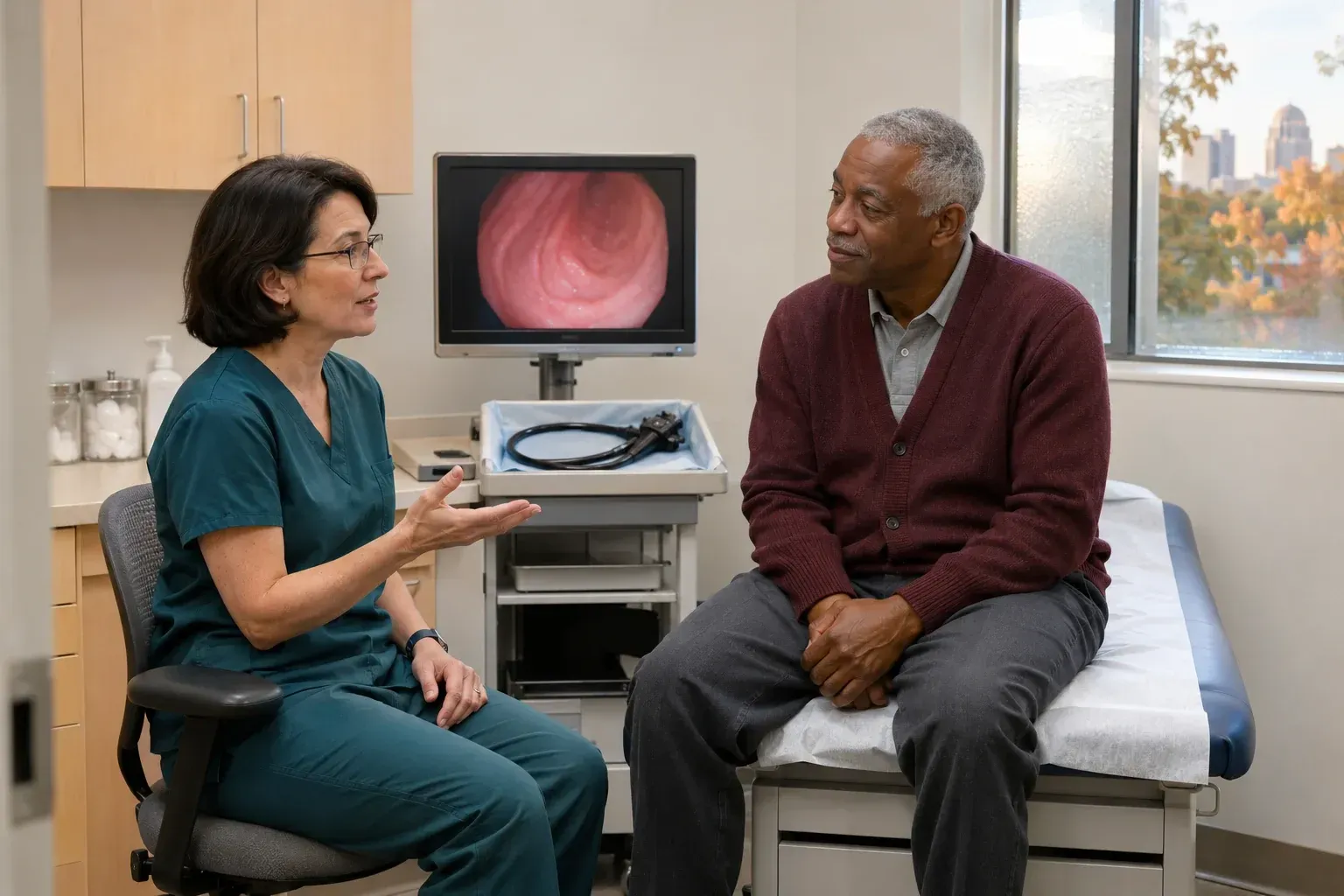
An upper endoscopy, formally called an esophagogastroduodenoscopy or EGD, is a procedure that examines the upper digestive tract. A thin, flexible tube called an endoscope, carrying a light and a small camera, is passed through the mouth and down the throat. It shows the esophagus, the stomach, and the first part of the small intestine.
You're sedated for comfort, so most people feel relaxed and remember little. It's an outpatient procedure, which means you go home the same day, and it's one of the most common tests in gastroenterology.
How Does an Upper Endoscopy Find Stomach Cancer?
The doctor looks for changes in the stomach lining, such as an ulcer that doesn't look typical, a raised or irregular area, thickened folds, or tissue that bleeds easily. High definition video equipment gives a clear, magnified view of the surface.
When something looks suspicious, small instruments pass through the scope to take biopsies. The doctor often samples several spots to improve the chance of catching abnormal cells. That's why you may hear the phrase EGD with biopsy.
Why Is a Biopsy Needed to Confirm Stomach Cancer?
Because looks can be deceiving. Ulcers, inflammation, infection, and cancer can sometimes appear similar through a camera. Only a pathologist, examining tissue under a microscope, can say for certain whether cancer cells are present and what type they are.
The same tissue can also reveal other things, such as a Helicobacter pylori infection, which isn't cancer but can raise stomach cancer risk and is treatable. If cancer is found, further lab testing on the sample can help guide treatment decisions.
Can an Upper Endoscopy Miss Stomach Cancer?
It can, though it doesn't happen often. Some stomach cancers are flat, subtle, or start deep in the stomach wall, where standard biopsies may not reach. Early cancers can be especially hard to see, which is why careful technique and multiple biopsies matter.
If symptoms continue after a normal result, tell your doctor. A repeat exam or additional testing, such as an endoscopic ultrasound, may be reasonable. A single normal exam isn't a promise that nothing will ever develop.
What Other Tests May Follow an Endoscopy?
If cancer is confirmed, more tests help determine how far it has spread. An endoscopic ultrasound uses sound waves from the tip of the scope to show how deeply a tumor has grown into the stomach wall and whether nearby lymph nodes are involved. A CT scan checks for spread to other areas, such as the liver and lymph nodes.
Other imaging, such as a PET scan, and blood tests may be used as well, and sometimes a surgeon looks inside the abdomen before surgery. An endoscopy can't show spread beyond the stomach, which is why these steps matter.
What Symptoms Should Prompt an Upper Endoscopy?
See your doctor if you have ongoing indigestion or heartburn, belly pain, feeling full too quickly, nausea, vomiting, trouble swallowing, loss of appetite, unplanned weight loss, black or tarry stools, or signs of anemia such as unusual fatigue. These symptoms have many causes, and most aren't cancer.
Still, they're worth checking, especially if they last more than a few weeks or keep getting worse. If you're not sure whether it's time to call, our list of six reasons to see a gastroenterologist is a good place to start.
What Else Can an Upper Endoscopy Find?
Plenty. The same exam can find ulcers, gastritis, acid reflux damage, hiatal hernias, narrowing of the esophagus, and changes in the esophageal lining. For a closer look at common conditions, read about acid reflux and heartburn, Barrett's esophagus, and esophageal stricture.
Some problems can be treated during the procedure. For example, a narrowed esophagus can be stretched, and bleeding can sometimes be controlled. That makes the test useful for treatment as well as diagnosis.
Who Is at Higher Risk for Stomach Cancer?
Risk factors include a Helicobacter pylori infection, a family history of stomach cancer, smoking, a diet high in salted or smoked foods, older age, and certain stomach conditions such as long term inflammation or pernicious anemia. Having a risk factor doesn't mean you'll develop cancer, but it can change how closely your doctor watches your symptoms.
If you have a strong family history, tell your doctor. It can shape the questions they ask and the tests they recommend.
Is There Routine Screening for Stomach Cancer in the United States?
For people at average risk with no symptoms, there isn't a routine stomach cancer screening program in the United States. That's different from colon cancer, where screening is recommended starting at age 45.
An upper endoscopy is typically done because of symptoms, risk factors, or a finding from another test. If you have no symptoms and no risk factors, it's not usually needed, so ask your doctor what makes sense for you.
How Do You Prepare for an Upper Endoscopy?
You'll receive written instructions, and the main rule is to have an empty stomach. That usually means no solid food for a set number of hours before, with a cutoff for liquids as well. Follow the times you're given, because food in the stomach blocks the view and can make sedation less safe.
Tell the office about all your medications, especially blood thinners and diabetes medicines, as they may need adjusting. Arrange a driver, since sedation means you can't drive afterward.
What Happens During an Upper Endoscopy?
You'll lie on your side while sedation is given through an IV. The doctor passes the scope through the mouth, examines the esophagus, stomach, and the start of the small intestine, and takes biopsies if needed. Air is used to open the folds, so you may feel bloated later.
The procedure usually takes a short time, often well under an hour, and most people sleep through it. Because the scope doesn't press on the airway, you can breathe normally the whole time.
What Is Recovery Like After an Upper Endoscopy?
You'll rest in a recovery area for a short while as the sedation wears off. A mild sore throat and some gas or bloating are common and usually pass quickly. Most people return to normal activity the next day.
Call the office or seek emergency care for severe or worsening belly pain, fever or chills, vomiting blood, black stools, trouble swallowing, or chest pain. These are uncommon, but they need prompt attention.
How Long Do Biopsy Results Take?
If biopsies were taken, results usually come back within several days to about a week or two, depending on the lab and whether special tests are needed. Your doctor reviews the report and tells you what it means and what to do next.
For a full explanation of timing, see our article on how long endoscopy biopsy results take. Waiting can be stressful, so ask the office how and when you'll hear back before you leave.
Where Can You Have an Upper Endoscopy in Louisville, KY?
Louisville patients can have an upper endoscopy at Kentuckiana Gastroenterology & Paramount Surgery Center on Dupont Square, where visits and procedures take place in one location. Dr. Anand Gupta, FACG, is board certified in gastroenterology and hepatology and has performed over 40,000 endoscopic procedures.
Learn more on the new patient information page, read about the physician on the about page, or ask a question through the contact page. This article is for general education and doesn't replace advice from your own doctor.
Frequently Asked Questions: Upper Endoscopy and Stomach Cancer in Louisville, KY
Can an upper endoscopy detect stomach cancer?
Can an endoscopy miss stomach cancer?
Is a biopsy always taken during an upper endoscopy?
What symptoms should lead to an upper endoscopy?
Is an upper endoscopy painful?
How long does an upper endoscopy take?
Where can I get an upper endoscopy in Louisville, KY?