Is Cologuard as Accurate as a Colonoscopy in Louisville, Kentucky?
No. A colonoscopy is more accurate overall and remains the gold standard for colon cancer screening. In studies, Cologuard found about 92 to 95 percent of colorectal cancers but only about 42 to 43 percent of advanced precancerous polyps, and it can give false positive results. A colonoscopy lets the doctor see the entire colon and remove polyps during the same visit. A positive Cologuard result always needs a colonoscopy to check it. Average risk adults can start screening at age 45. Learn about colonoscopy in Louisville, read how to prepare for a colonoscopy, or contact our office.
Picture a box showing up on your porch. Inside is a kit, a collection container, and a prepaid shipping label. No bowel prep, no day off work, no driver. It's easy to see why so many people in Louisville ask whether a stool test like Cologuard can do the same job as a colonoscopy.
It's a fair question, and the answer deserves more than a quick yes or no. Both tests can protect you from colon cancer, but they don't work the same way, and they don't catch the same things. Here's a clear comparison so you can talk it through with your doctor.
Is Cologuard as Accurate as a Colonoscopy?
No. Cologuard is a good screening test, but a colonoscopy is more accurate. The biggest difference is in precancerous polyps. Cologuard finds most colon cancers, yet it misses more than half of the advanced polyps that haven't become cancer yet. A colonoscopy looks directly at the lining of the colon, so it can find those polyps and remove them on the spot.
That matters because the goal of screening isn't only to find cancer early. It's to stop cancer before it starts. A test that finds and removes polyps does that job better than one that can only suggest a polyp may be present.
What Is Cologuard and How Does It Work?
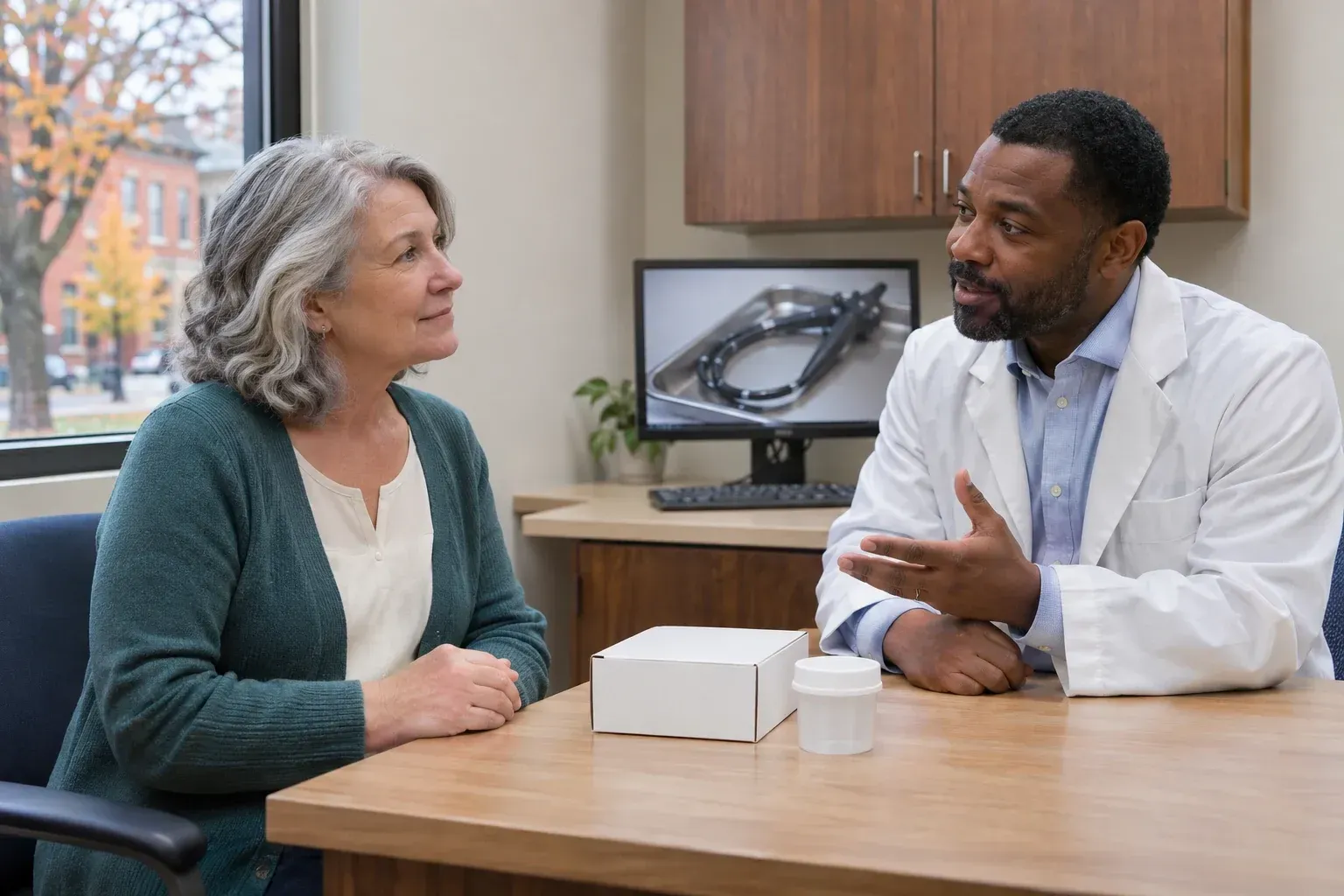
Cologuard is a multitarget stool DNA test. You collect a single stool sample at home and mail it to a lab. The lab checks it for hidden blood and for DNA changes that can come from cancer cells or advanced polyps. If the result is negative, you wait and repeat the test later. If it's positive, you need a colonoscopy.
It's a screening tool for people at average risk who have no symptoms. It isn't designed to investigate bleeding, pain, or changes in bowel habits, and it can't remove anything or look at the colon itself.
How Accurate Is Cologuard for Colon Cancer?
In the large study that supported the original test, Cologuard found about 92 percent of colorectal cancers. An updated version, Cologuard Plus, reported about 95 percent in its own trial. Those are strong numbers, and they're a big reason the test is recommended as a screening option.
Still, no stool test finds every cancer. A small share of cancers can be missed, and a negative result doesn't mean you're in the clear forever. That's why the test has to be repeated on schedule.
How Well Does Cologuard Find Precancerous Polyps?
This is where the gap shows. In those same studies, Cologuard detected only about 42 to 43 percent of advanced precancerous polyps. Put another way, more than half of them were not flagged. Smaller polyps are harder still for a stool test to pick up.
Why does that matter? Advanced polyps are the ones most likely to turn into cancer over time. If a test misses them, you might feel reassured when you shouldn't. A colonoscopy has a far better chance of seeing them and taking them out.
How Accurate Is a Colonoscopy?
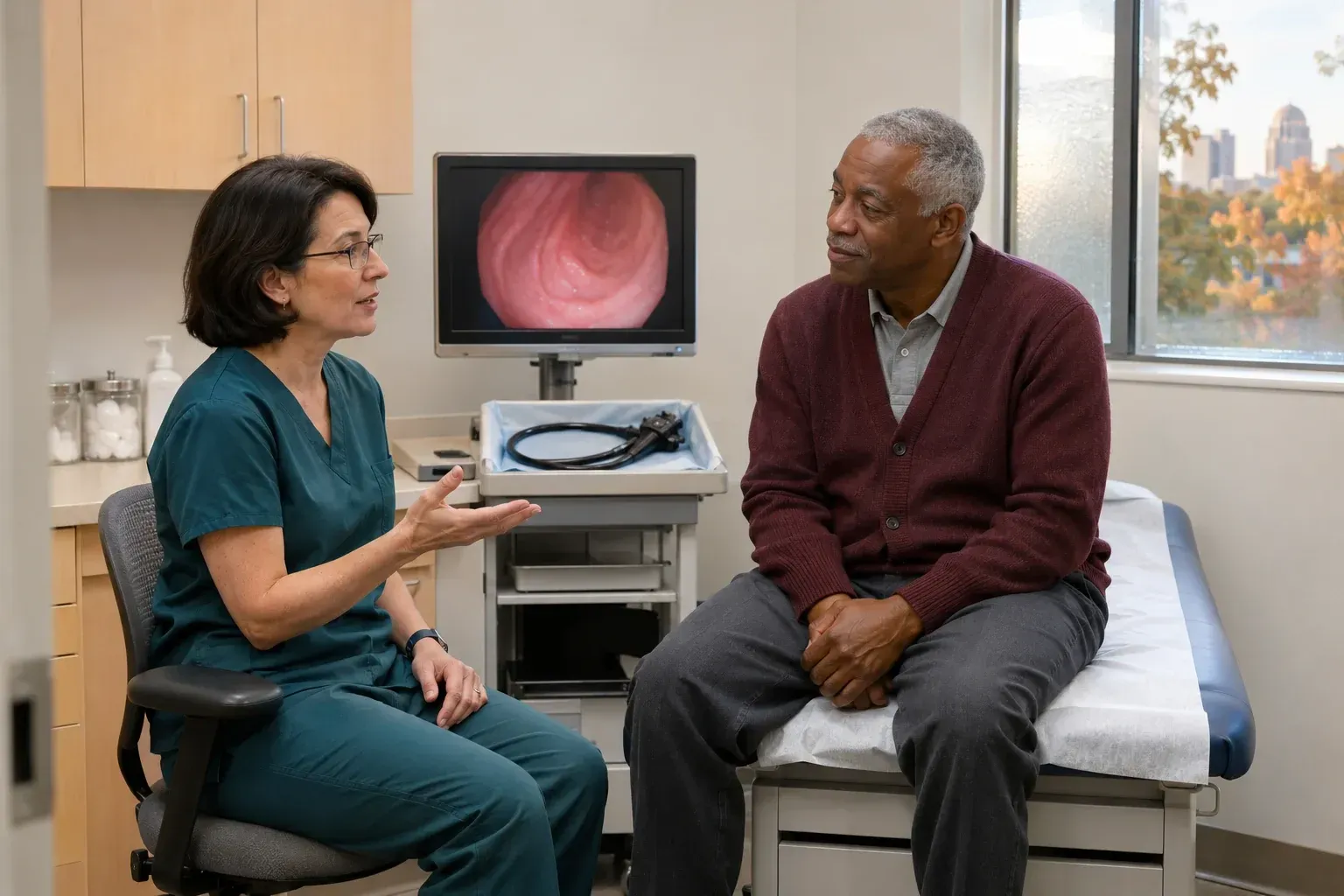
A colonoscopy is considered the most accurate test we have for the colon. A thin, flexible scope with a camera lets the doctor view the whole colon and rectum in real time, and polyps can be removed during the same exam.
It isn't perfect, either. Research shows that some small polyps can be missed, with miss rates for adenomas in studies ranging from roughly 6 to 27 percent, and far fewer for large or advanced ones. A clean colon, a careful exam, and an experienced physician improve the odds, which is why the prep and the doctor both matter.
Why Is a Colonoscopy Called the Gold Standard?
Because it does two jobs at once. It finds problems, and it fixes many of them. When a polyp is found, it can be taken out right then and sent to a lab for testing. A stool test can only tell you that something may be wrong, then send you for the same procedure anyway.
The exam also works for people with symptoms. If you've had rectal bleeding, iron deficiency anemia, lasting changes in bowel habits, or belly pain, a colonoscopy is the right test, not a stool kit.
What Happens If Your Cologuard Result Is Positive?
A positive result means you need a colonoscopy, and national guidelines say it should happen promptly, ideally within six months. A positive stool test isn't a cancer diagnosis. It means the test saw something that needs to be looked at.
It's also common to get a positive result and find nothing. Cologuard has a higher false positive rate than some other tests, so a normal colonoscopy after a positive result does happen. Many people feel frustrated by that, but it's far better than missing a problem.
How Often Do You Need Cologuard Compared With a Colonoscopy?
Cologuard is generally repeated every three years. A colonoscopy with normal results is typically repeated every ten years for people at average risk. If polyps are found, your doctor may recommend a shorter interval, based on the number, size, and type of polyps.
So even though a stool test feels easier, you'll repeat it more often, and each negative result still carries a chance of a miss. A colonoscopy asks more of you once, then gives you a long stretch of protection when the results are normal.
Who Shouldn't Rely on Cologuard?
Cologuard is only meant for average risk adults with no symptoms. A colonoscopy is the better route if you have a personal history of polyps or colorectal cancer, a family history of colorectal cancer or polyps, inflammatory bowel disease, or a genetic condition such as Lynch syndrome.
It's also the right choice if you notice rectal bleeding, black or bloody stools, iron deficiency, unexplained weight loss, or a lasting change in your bowel habits. Our guide to rectal bleeding and its possible causes explains why those symptoms shouldn't wait, and the list of times to see a gastroenterologist can help you decide.
When Does Cologuard Make Sense?
For some people, a stool test is the right first step. If you're at average risk, you've been putting off screening, and a colonoscopy feels out of reach, a stool test is far better than no test at all. Most doctors agree that the best screening test is the one you'll actually complete.
Think carefully about the follow through. If a positive result would lead to a colonoscopy anyway, and you're willing to do that, the stool kit is a reasonable choice. If you'd skip the colonoscopy even after a positive result, that's worth talking over with your doctor first.
What Should You Expect From a Colonoscopy in Louisville?
Before the exam, you'll receive written prep instructions. Following the diet and finishing the full prep on schedule matters, because a clean colon makes a more accurate exam. You'll also need a ride home, since you're sedated for comfort. Our guide on foods to avoid before a colonoscopy walks through the diet.
The exam usually takes 30 to 60 minutes, followed by a short, monitored recovery. Most people feel normal within a few hours, with some gas and bloating, and they return to regular activity the next day. Lab results on any polyps come afterward, and your doctor will recommend when to repeat screening.
Does Insurance Cover Colonoscopy and Cologuard?
Many plans cover screening for adults who meet the age and risk guidelines, but rules about timing, cost sharing, and later exams vary. The practice accepts Medicare, Kentucky and Indiana Medicaid, Aetna, Anthem, Humana, UnitedHealthcare, TRICARE, and several others, so it's worth checking your own plan.
Call ahead and ask what's covered for a screening exam, what changes if a polyp is removed, and what you may owe. The new patient information page lists accepted plans and forms.
How Do You Choose Between Cologuard and a Colonoscopy?
Start with your risk and your symptoms. If you have either a higher risk or any warning signs, a colonoscopy is the answer. If you're at average risk and just starting screening at 45, ask yourself three questions. Will I finish the test? Will I act on a positive result? And do I want the extra protection of having polyps removed?
Then talk with a gastroenterologist who can look at your whole picture. This article is for education and isn't a substitute for medical advice, and your own history should guide the choice.
Where Can You Get a Colonoscopy in Louisville, KY?
Kentuckiana Gastroenterology & Paramount Surgery Center is an outpatient endoscopy center at 1003 Dupont Sq. N Ste 9a in Louisville. Anand Gupta, MD, FACG, who is board certified in gastroenterology and has performed more than 40,000 endoscopic procedures, performs colonoscopies using high definition video equipment.
Visits are by appointment, Monday through Friday from 9:00 am to 5:00 pm. Read more about the practice and physician, see the full list of services, call 502.893.7744, or use the contact page to schedule.
Frequently Asked Questions: Cologuard vs Colonoscopy in Louisville, KY
Is Cologuard as accurate as a colonoscopy?
How accurate is Cologuard for colon cancer?
Does a positive Cologuard mean I have cancer?
How often do I need Cologuard compared with a colonoscopy?
At what age should I start colon cancer screening?
Who should have a colonoscopy instead of Cologuard?
Where can I schedule a colonoscopy in Louisville, KY?