How Can You Identify Internal vs External Hemorrhoids in Louisville, Kentucky?
Internal hemorrhoids form inside the rectum and usually cause painless bright red bleeding or tissue that slips out during a bowel movement. External hemorrhoids form under the skin around the anus and tend to cause a tender lump, swelling, itching, and pain, especially when sitting. A thrombosed external hemorrhoid, which contains a blood clot, can be suddenly and very painful. You can have both types at once, and rectal bleeding should always be checked because it can also come from other conditions. Learn about hemorrhoid banding in Louisville, compare banding and surgery, or contact our office.
You noticed something. Maybe it was a streak of bright red on the toilet paper, a tender bump you found while wiping, or a stubborn itch that won't quit. You'd rather not be searching this at all, but here you are, trying to work out what's going on and whether it's serious.
The good news is that hemorrhoids are very common and very treatable. The first step is understanding which kind you might have, since internal and external hemorrhoids cause different symptoms and call for different care. Here's how to tell them apart, and when it's time to get checked.
How Can You Identify Internal vs External Hemorrhoids?
Start with where the symptoms show up and whether it hurts. Internal hemorrhoids sit inside the rectum, so you usually can't see or feel them, and the main sign is painless bleeding. External hemorrhoids sit under the skin around the anus, so you can often feel a lump, and they tend to itch, swell, or ache.
Bleeding without pain suggests an internal hemorrhoid. A painful lump suggests an external one. Many people have a mix of symptoms, and only an exam can say for sure, so use this guide as a starting point and not a diagnosis.
What Are Internal Hemorrhoids?
Internal hemorrhoids are swollen blood vessels inside the lower rectum, above the point where the lining changes from the inner surface to the sensitive skin near the anal opening. That inner lining has few pain nerves, so internal hemorrhoids often don't hurt.
They're usually caused by straining, constipation, diarrhea, long periods on the toilet, pregnancy, or heavy lifting. Many people have them without knowing until they bleed.
What Are External Hemorrhoids?
External hemorrhoids are swollen veins under the skin around the anus. The skin there has many pain nerves, so these hemorrhoids are more likely to feel tender, swollen, or sore, and they can make it uncomfortable to sit or clean the area.
They share the same causes as internal hemorrhoids, such as straining and pressure. They may flare after a hard stool, a long day sitting, or a stretch of constipation.
What Is the Main Difference Between Internal and External Hemorrhoids?
Location, and with it, pain. Internal hemorrhoids are inside and typically painless, with bleeding as the main sign. External hemorrhoids are outside, where the nerves are more sensitive, so a lump, pain, and itching are more common.
That difference also shapes treatment. Some office procedures work well on internal hemorrhoids, while external ones usually need other approaches. Our overview of what you need to know about hemorrhoids covers the basics.
What Symptoms Point to Internal Hemorrhoids?
The classic sign is bright red blood on toilet paper, in the toilet bowl, or on the stool, without pain. Some people also notice tissue that pushes out during a bowel movement, which looks like a pink or red moist lump, along with mucus, a feeling of fullness, or leakage that can cause itching.
Pain usually isn't a feature unless the hemorrhoid slips out and gets squeezed or develops a clot. That's why painless bleeding is easy to ignore, and why it's important not to.
What Symptoms Point to External Hemorrhoids?
Look for a tender or painful lump near the anus, swelling, itching, irritation, and discomfort when sitting or wiping. External hemorrhoids may bleed, especially if irritated, but pain and lumps are the main clues.
Over time, repeated flares can leave behind extra skin, often called skin tags. These aren't dangerous, though they can be bothersome and make cleaning harder.
What Is a Thrombosed Hemorrhoid?
A thrombosed hemorrhoid is an external hemorrhoid that has formed a blood clot. It tends to appear suddenly as a firm, tender, bluish or purplish lump, and the pain can be intense, particularly in the first couple of days.
The pain usually eases over a week or two, though the lump can take several weeks to settle, and a skin tag may remain. If the pain is severe, a doctor can sometimes provide relief, particularly when it's seen early, so don't suffer in silence.
What Are the Grades of Internal Hemorrhoids?
Doctors grade internal hemorrhoids from 1 to 4. Grade 1 hemorrhoids bleed but don't slip out. Grade 2 slip out during a bowel movement and go back in on their own. Grade 3 slip out and have to be pushed back in. Grade 4 stay out and can't be pushed back in.
Grading helps guide treatment. External hemorrhoids aren't graded in the same way. If you're curious how grade affects the choice of procedure, see our comparison of hemorrhoid banding vs surgery.
Can You Have Internal and External Hemorrhoids at the Same Time?
Yes. Some people have both, and a large internal hemorrhoid that slips out can look and feel like an external one. That overlap is one reason self diagnosis is tricky.
If your symptoms don't fit neatly into one box, that's normal. A doctor can examine the area and tell you what's present, which makes it much easier to pick a treatment that works.
Is Rectal Bleeding Always From Hemorrhoids?
No, and this is the most important point in this article. Hemorrhoids are a common cause of bright red bleeding, but polyps, colorectal cancer, inflammatory bowel disease, and anal fissures can cause bleeding too. You can't tell the difference by looking.
Never assume bleeding is from hemorrhoids. Take extra care if you've reached 45, have a close relative with colorectal cancer, see dark or maroon blood, or notice changes in bowel habits, weight loss, or signs of anemia. Our guide to five possible causes of rectal bleeding explains more.
What Else Can Look or Feel Like a Hemorrhoid?
Several conditions mimic hemorrhoids. An anal fissure, a small tear in the lining, causes sharp pain during bowel movements and some bright red blood. An abscess or fistula can cause a painful, swollen area, often with fever. Skin tags, anal warts, and rectal prolapse can all form lumps near the anus.
Because the treatments differ, it helps to have a proper exam rather than guessing. That's especially true if the lump is hard, growing, or doesn't improve.
How Do Doctors Diagnose Hemorrhoids?
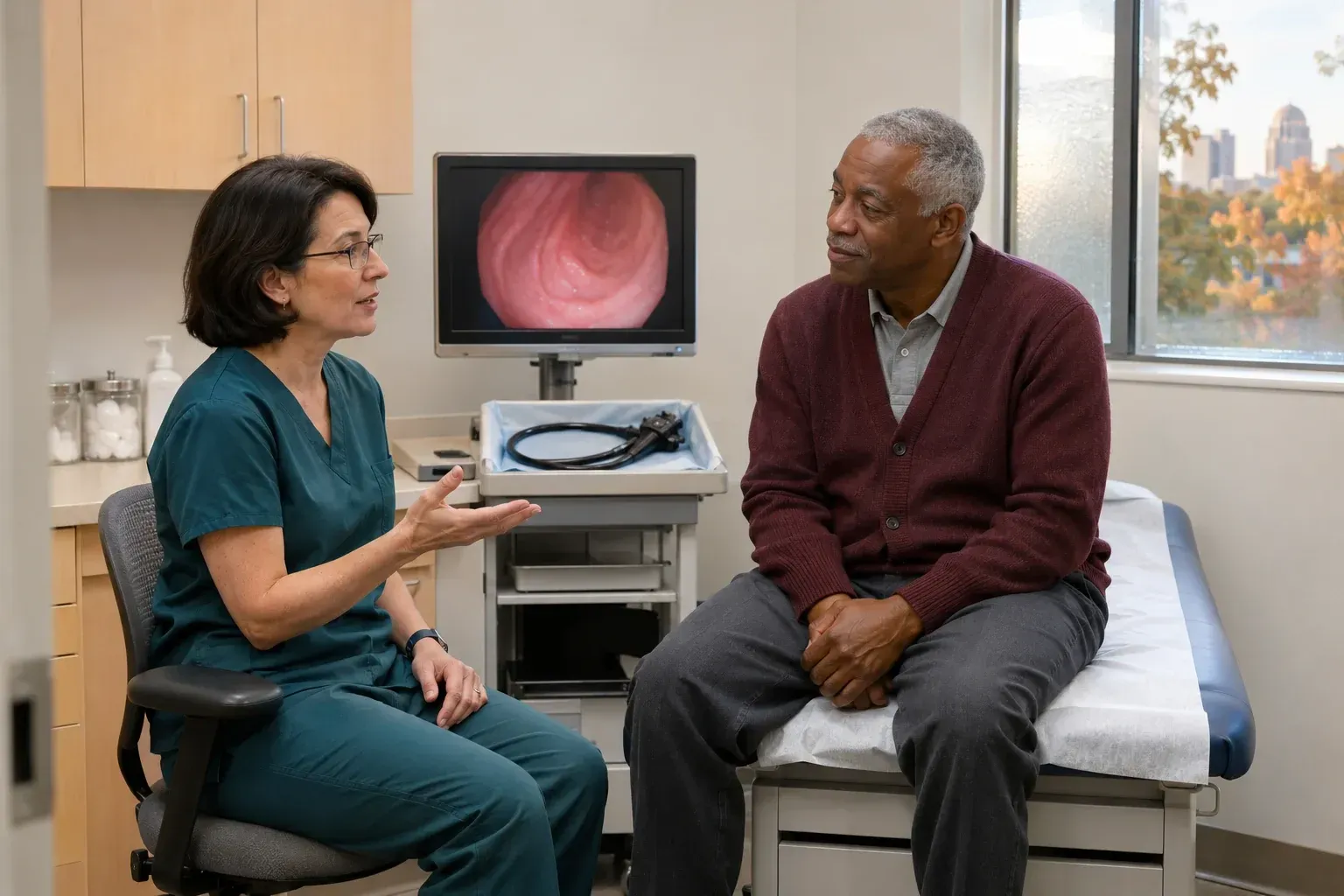
Usually with a simple exam. The doctor looks at the area, may feel inside with a gloved finger, and often uses a small scope called an anoscope to see internal hemorrhoids directly. It's quick, and most people find it more manageable than they expected.
If you have bleeding that isn't clearly explained, your doctor may also recommend a flexible sigmoidoscopy or a colonoscopy to rule out other causes. You can read about the flexible sigmoidoscopy and colonoscopy exams on our website.
How Are Internal and External Hemorrhoids Treated Differently?
Both start with the same basics: fiber, fluids, and avoiding straining. For internal hemorrhoids that keep bleeding or slipping out, office treatments such as rubber band ligation can help, and the banding FAQ answers common questions about it.
External hemorrhoids are usually managed with home care, and a painful clot may be treated by a doctor. Surgery is reserved for large or stubborn cases of either type. Your doctor will match the treatment to what they find.
What Can You Do at Home for Relief?
Eat more fiber, aiming for about 25 grams a day, and drink plenty of water. Avoid straining and skip the long sits on the toilet. A warm sitz bath a few times a day can ease soreness, and over the counter creams or pads may give short term relief.
Keep the area clean and dry, and use soft, unscented wipes. Our list of common hemorrhoid myths can help you sort fact from fiction.
When Should You See a Gastroenterologist?
See a doctor for any rectal bleeding, severe or worsening pain, a hard or growing lump, symptoms that last more than a week or two despite home care, or any change in your bowel habits. Get urgent care for heavy bleeding, dizziness, fever, or trouble urinating.
If you're unsure, it's better to ask. Not sure it's time? Our post on six warning signs is a handy checklist.
How Can You Prevent Hemorrhoids?
Prevention follows the same habits as treatment. Get enough fiber and water, stay active, go when you feel the urge, and avoid straining or scrolling on the toilet. Keeping a healthy weight and avoiding heavy lifting with a held breath also help.
Pregnancy is a common trigger because of pressure and hormone changes. If you're expecting, our post on pregnancy and digestive symptoms explains what to expect.
Who Treats Hemorrhoids in Louisville, KY?
Hemorrhoid evaluation and in office banding are available from Anand Gupta, MD, FACG, at the Louisville practice on Dupont Square. Appointments are offered Monday through Friday, and a visit starts with listening to your symptoms and an exam.
Meet the team on the about page, phone 502.893.7744, or send a request through the contact page. This article can't diagnose you, but it can help you ask better questions.
Frequently Asked Questions: Internal vs External Hemorrhoids in Louisville, KY
How can you tell if a hemorrhoid is internal or external?
Do internal hemorrhoids hurt?
What is a thrombosed hemorrhoid?
Can you have internal and external hemorrhoids together?
Is rectal bleeding always caused by hemorrhoids?
When should I see a doctor for hemorrhoids?
Where can I get hemorrhoid treatment in Louisville, KY?